


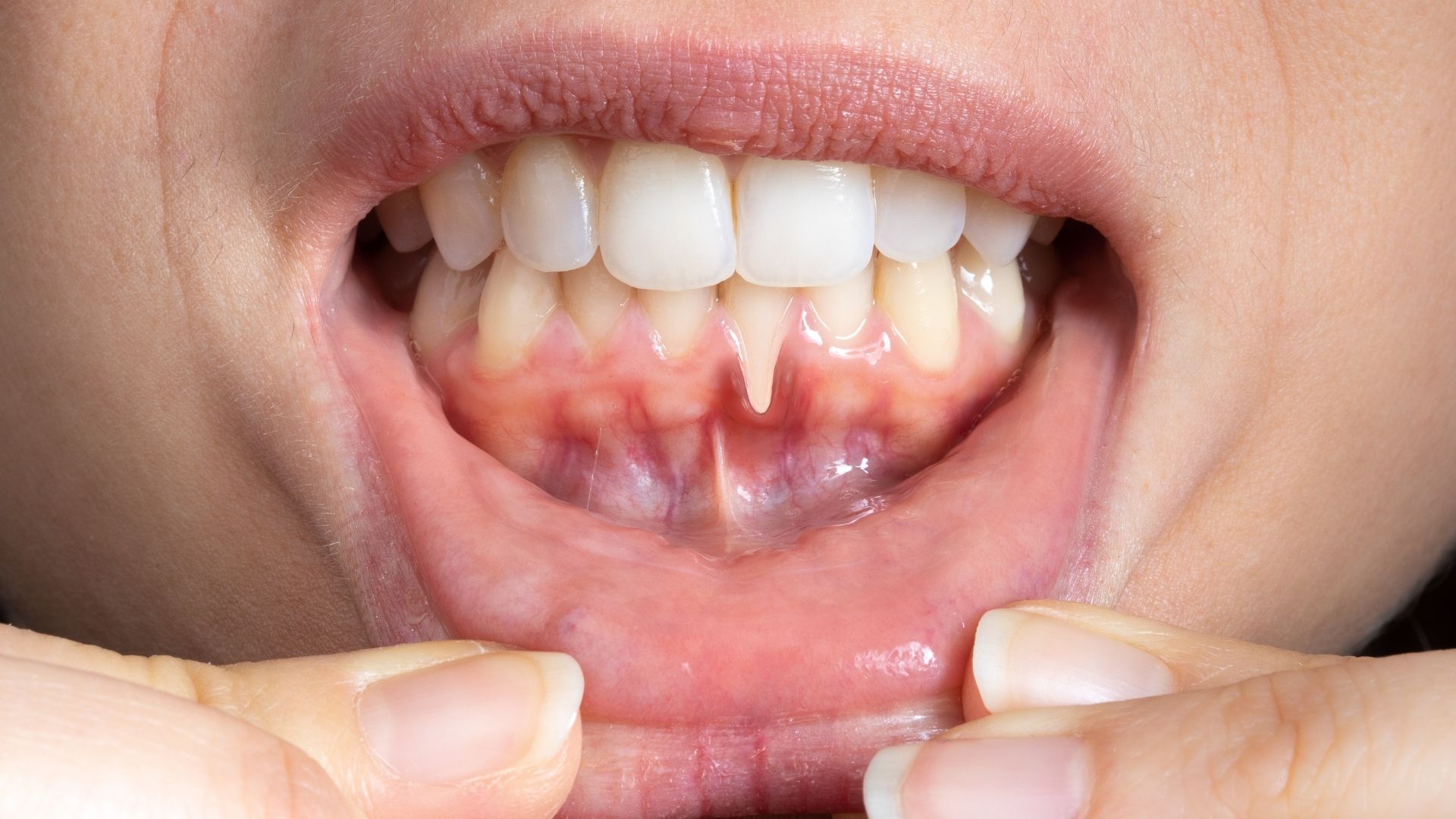
Periodontitis, commonly associated with gum recession and advanced gum disease, is a serious bacterial infection that affects the soft tissues surrounding the teeth. If left untreated, it can lead to progressive destruction of the supporting bone structure, ultimately causing tooth mobility and tooth loss. Gum recession occurs when the gum tissue pulls away from the tooth surface, exposing the roots and increasing sensitivity and vulnerability to decay.
Early diagnosis and professional periodontal care are essential to prevent long-term complications and maintain healthy gums.
What are the treatment methods for gum recession?
Treatment depends on the severity of the condition.
In the early stages, initial periodontal therapy is performed. This includes professional deep cleaning procedures such as scaling and root planing to remove plaque, tartar, and bacterial deposits below the gum line. These treatments aim to stop disease progression, reduce inflammation, eliminate infection, and minimize tooth sensitivity.
In advanced cases of gingival recession or periodontitis, periodontal surgical procedures (gum surgeries) may be required. These procedures can include flap surgery to clean deeper areas, regenerative treatments to restore lost bone and tissue, or gum grafting to cover exposed roots and improve aesthetics.
With proper treatment and regular maintenance, periodontal therapy effectively protects gum health, preserves supporting bone, and ensures long-term oral stability.
- Periodontal problems are bacterial gum infections of the gum tissue and the bone holding the teeth. Gum disease is the main cause of gum recession.
- Wrong, hard and traumatic tooth brushing can cause gingival recession.
- Plaque and tartar formed as a result of inadequate oral care can cause gingival infections and gingival recession.
- Hormonal changes,
- Use of tobacco products,
- Crowded teeth or a misaligned set of teeth cause gingival recession as a result of excessive traumatic forces.
- Clenching and grinding (bruxism) is another reason for gum recession.
- The most effective method applied in gingival recession is to solve the problem that caused the recession, and gingival recession can be treated easily and very quickly with a regular effective brushing habit after tartar cleaning.
The teeth should be brushed with a medium hard or soft brush, without applying much pressure, from the gum to the tooth. Apart from these options, electric brushes with soft brush feature can also be used.
Tooth sensitivity can have many causes. The most common problems we encounter are gum diseases and caries. It is necessary to apply to a specialist dentist to solve the problem.